
Within the operations center of a global logistics enterprise, three dashboards monitored alerts around the clock, color-coded by severity. On a typical Monday, these dashboards processed more than 22,000 events; by Friday, that figure approached 110,000. Internally, the team had come to refer to the alerts as "wallpaper," an indication of how little attention each alert ultimately received.
This was not a deficiency in tooling. The organization had invested substantially in best-of-breed monitoring across its warehouse management systems, fleet telematics, cloud workloads, and customer-facing tracking platforms. The core issue was a lack of interoperability: each vendor maintained complete visibility into its own domain but had no awareness of the broader environment.
This case study examines how the company deployed Scout's AI-powered AI-powered Event Intelligence System (EIS), to unify event streams across nine independent monitoring platforms, suppress noise, and transform raw telemetry into prioritized, business-aware incidents, all without replacing a single existing tool.
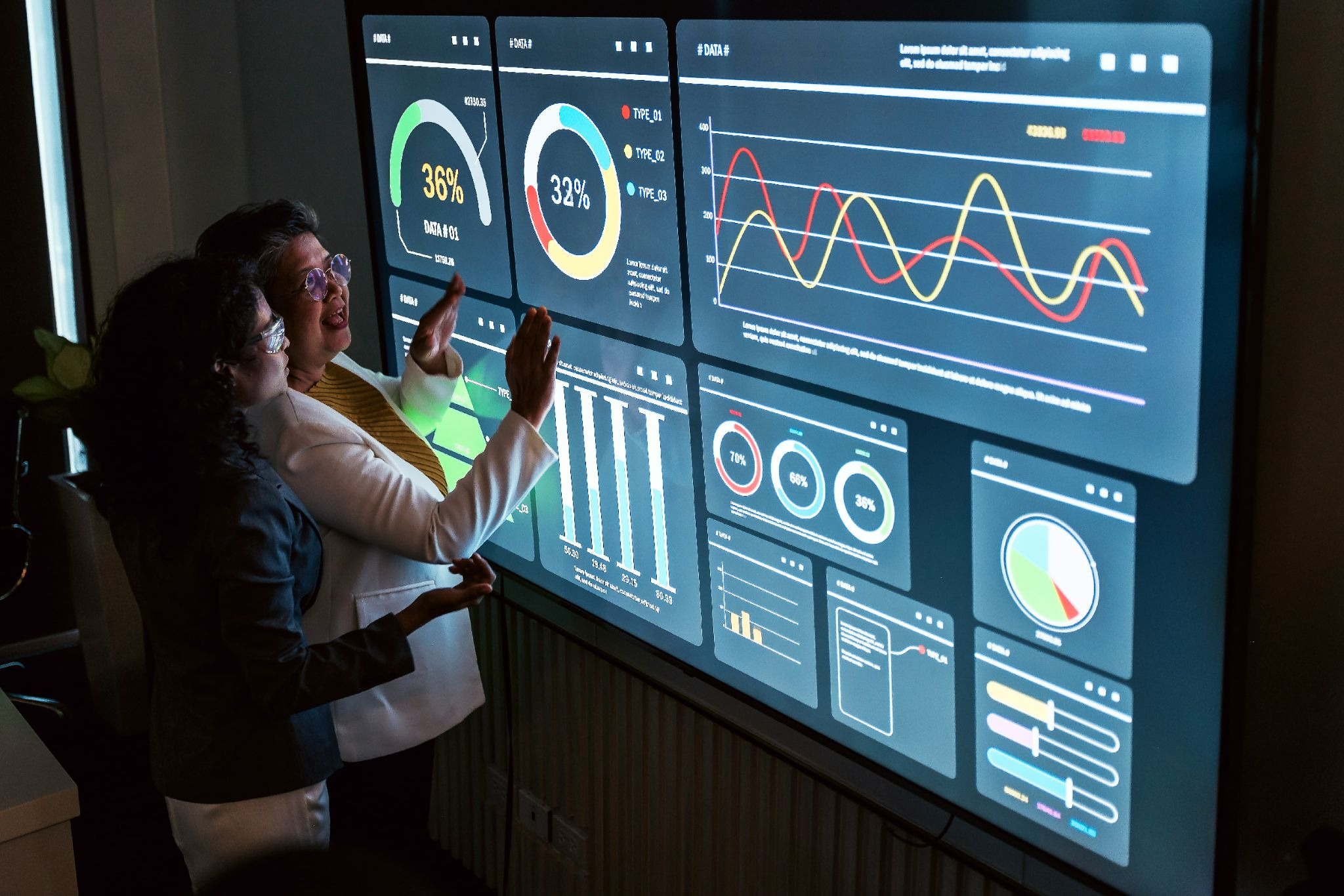
Over a decade of acquisitions, regional expansions, and digital initiatives, the company had assembled a sprawling monitoring footprint. Network monitoring for distribution centers ran on one platform. Cloud-native services on AWS and Azure used native observability tools. The fleet telematics group ran its own IoT monitoring stack. Application performance monitoring covered the e-commerce and tracking portals. A separate SaaS-based log management platform served security and compliance teams.
Each tool worked. None of them talked to each other. The operational pain was acute and visible at every level:
Two consequences followed. First, MTTR drifted upward, particularly for incidents that touched more than one domain. Second, and more quietly, trust in monitoring eroded. When alerts are ignored often enough, the muscle memory to dismiss them becomes automatic, a cultural risk that no monitoring tool can fix on its own.
The company evaluated several paths. Replacing nine monitoring tools with a single platform was deemed too disruptive for a 24×7 logistics operation. Building in-house correlation logic would consume engineering bandwidth they didn't have. Bolting an AIOps module onto one existing tool wouldn't address signals from the other eight.
What they needed was an intelligence layer that sat above the monitoring environment that was vendor-agnostic, designed for correlation and prioritization, and built for enterprise scale. They selected Scout's Event Intelligence System (EIS) for four reasons:
The decision was framed by the CIO in a single sentence: "We're not buying another monitoring tool. We're buying judgment."
EIS processed the company's combined event streams through five operational stages:
1. Signal ingestion: Telemetry from all nine monitoring platforms APM, network monitoring, IoT telematics, cloud-native observability, log management, infrastructure metrics flowed into EIS through native connectors and API integrations. Events were normalized into a unified schema regardless of source.
2. AI correlation: Topology-aware correlation grouped related events by service dependency, time window, and behavioral pattern. A degraded API gateway, the slow microservice behind it, and the warehouse scanners reporting timeouts became a single incident with a clear dependency chain not 200 separate alerts.
3. Impact Analysis: Every correlated incident was mapped to affected business services: customer tracking, dispatch, route optimization, warehouse throughput, partner integrations. Engineers no longer had to ask "does this matter?" the system already knew which workflows were at risk.
4. Predictive Intelligence: Machine learning models flagged drift, slow-burn anomalies, and emerging patterns long before they crossed any threshold. Memory leaks, gradual queue buildup, and unusual telemetry from edge devices appeared as early warnings rather than late incidents.
5. Intelligent Priority Routing: Surfaced incidents were ranked by business impact, blast radius, and SLA exposure, then routed to the right team with full context attached. Suppressed noise stayed suppressed and engineers never saw it.
The headline outcome was a 97% reduction in alert noise across the company's multi-vendor monitoring estate. Tens of thousands of weekly events collapsed into a short, prioritized stream of correlated incidents each one enriched with dependency context, business impact, and a clear path to resolution. For the first time in years, engineers began their shifts with a working queue instead of an alert storm.
The operational shift went deeper than volume. Triage became faster and more confident, and engineers stopped chasing symptoms in favor of addressing root causes. Predictive anomaly detection surfaced issues before customers or partners felt the impact, moving the team from reactive firefighting to proactive prevention. On-call rotations became sustainable again, easing the analyst fatigue that had quietly become a retention risk. Senior SREs reclaimed bandwidth for higher-value work automation, capacity planning, and reliability engineering rather than perpetual triage.
At the leadership level, the impact was unification. IT executives gained a single, business-aligned view of operational health spanning cloud, on-prem, IoT, and SaaS layers. Conversations with the business shifted from "how many alerts fired?" to "which services are at risk, and what are we doing about it?" a change in vocabulary that reflected a much deeper change in operational maturity.
The logistics company's transformation surfaced lessons that go beyond the mechanics of correlation and noise suppression. The most striking takeaway was how quickly the conversation inside the operations team changed. Once incidents arrived enriched and prioritized, debates about whether an alert deserved attention disappeared, and were replaced by sharper discussions about how to resolve the underlying issue. Intelligence at the event layer didn't just speed up workflows, it raised the quality of every conversation built on top of them.
A second insight emerged around the relationship between scale and sanity. As infrastructure grows across regions, vendors, and operational domains, the cost of not having a unifying intelligence layer compounds silently. Every new tool added to the stack expands coverage, but also expands the surface area for noise, duplication, and false signals. Scout’s EIS reframed scale from a liability into an advantage by giving the company more data to learn from, not more data to wade through. The lesson for any enterprise expanding its observability footprint is that intelligence must scale faster than instrumentation, or operations will steadily lose ground.
Finally, the engagement made clear that operational maturity is a people outcome, not just a technology outcome. The most meaningful changes were behavioral: engineers acting earlier, on-call teams sleeping through the night, leadership engaging with reliability in business terms, and skilled SREs spending their hours on engineering work rather than triage. For IT leaders, CIOs, SREs, DevOps engineers, and MSPs operating in complex multi-vendor environments, Event Intelligence is best understood not as a feature to evaluate, but as a capability that quietly raises the ceiling on what an operations team can accomplish. Ready to see what Event Intelligence could uncover in your environment? book a demo with Scout’s team to explore how AI-powered event correlation, noise suppression, and business-aware incident intelligence can transform your operations.



 No credit card required
