
Telecom operations are uniquely demanding. A single degradation event in a core router, packet gateway, DNS service, cloud workload, or customer portal can cascade across regions, enterprise clients, and consumer services. Moreover, modern telecom environments are no longer limited to physical network devices. They include hybrid cloud platforms, Kubernetes-based workloads, SD-WAN, edge compute, application performance monitoring, security systems, and multiple third-party tools.
This was exactly the challenge facing one telecom provider’s Network Operations Center (NOC). The NOC already had monitoring coverage. However, visibility alone was not enough. Each tool generated its own alerts, metrics, logs, and incident tickets. Consequently, engineers were overloaded with information but lacked a unified intelligence layer to identify what mattered first.
Scout’s main platform positioning aligned closely with this need: reduce noise, prevent disruptions, improve service health automatically, and provide unified visibility across applications, servers, networks, and cloud from one intelligent platform.
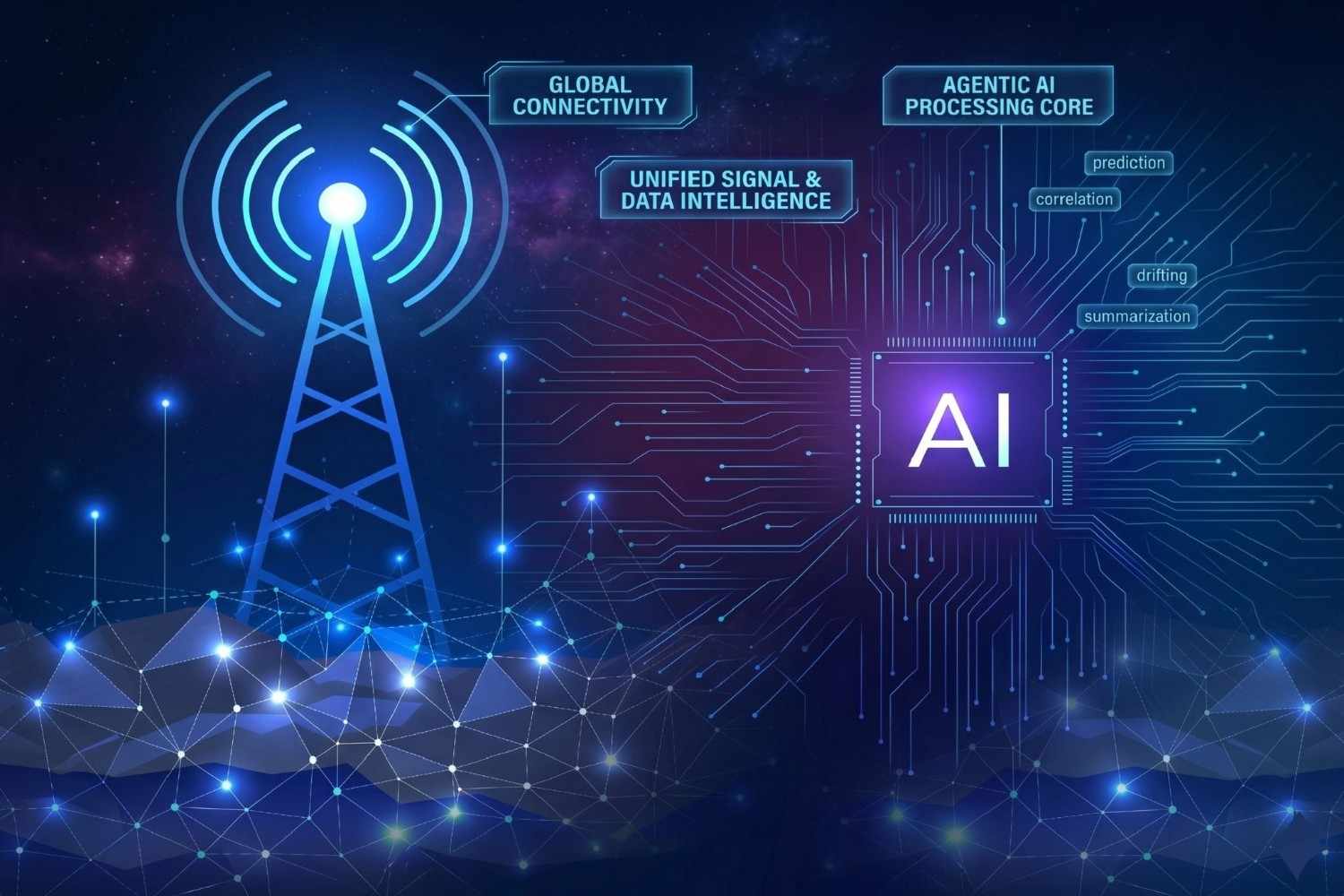
The telecom provider was struggling with four key operational challenges.
First off, alert fatigue was a major daily problem: during regional latency spikes or access network instability, the NOC would get hundreds or even thousands of alerts per minute - from routers, firewalls, logs, cloud metrics, customer experience tools and whatnot. The problem is that most of these alerts were duplicates, downstream symptoms, or low-priority events, so they were a complete waste of time and resources.
Second, getting to the root cause was a slow business. Engineers had to trawl through network topology data, event timestamps, app traces, syslogs, customer complaints and SLA dashboards, a whole lot of work that generally meant the mean time to resolve increased during the really high-severity incidents.
Third, business impact wasn't always clear. For example, a CPU spike, packet loss event or API timeout didn't necessarily tell us which customers, services, revenue streams or SLA commitments were actually at risk. So the customer often ended up escalating based on technical severity rather than actual customer impact.
And finally, operations were pretty reactive - traditional network monitoring could tell the customer what had already failed, but it struggled to give them a heads up on service degradation before hearing about it from users. Scout’s event intelligence capabilities help to solve this exact limitation. Traditional monitoring is great for knowing what has failed, but it leaves teams in a firefighting mode and that just doesn't cut it.
The company chose an Agentic AI Event Intelligence System as an intelligence layer across its telecom NOC. The idea here wasn't to replace the existing monitoring tools, but to integrate it all into a single platform that made sense of all the data coming in.
This solution provided five main capabilities:
The deployment kicked off with signal ingestion. We took in a wide range of event data from all the different systems routers, switches, firewalls, packet core systems, app logs, cloud workloads, databases, and all that jazz, and normalised it all into a unified event pipeline. This gave us a much better operational picture, but didn't force us to abandon our existing tools.
Next up was the AI correlation engine that clustered related events together using dependency mapping and topology intelligence. Instead of seeing packet loss, API latency, database errors, and customer portal issues as separate incidents, it looked at them all as part of one big incident.
Then there was the impact analysis that mapped each incident to the actual business services it could affect. This bit was really key because a network alarm that only affects a small lab environment is a whole lot less urgent than one that could impact enterprise VPN customers or high-value managed network contracts.
After that, predictive intelligence kicks in, spotting early signs of degradation. Scout doesn’t just wait for thresholds to be breached; it looks for combinations of anomalies such as rising retransmissions, unstable DNS response times, resource saturation, and interface flaps. Finally, intelligent prioritization ranked incidents by severity, user impact, SLA exposure and historical resolution data.
The telecom NOC ended up with a much more disciplined, data-driven operating model for incident response and service reliability. Alert volumes just became more manageable due to another advantage of event suppression; redundant, cascading and low-value alerts got pushed aside. That means that not only did teams no longer have to deal with all that unnecessary noise, but Scout’s Event Intelligence helped reduce alert noise by up to 85% day to day, allowing teams to focus on the incidents that actually matter, i.e., incidents that have a real impact on service.
Root cause detection got a whole lot easier because engineers no longer had to manually cobble together bits of events from the multiple disconnected dashboards they had to keep track of. With Scout’s EIS capabilities, they were able to do it 10 times faster and identify issues in seconds thanks to the power of AI.
Incident resolution is now faster and just plain more consistent. Thanks to prioritized routing, dependency context, and business impact mapping, NOC teams are escalating fewer incidents unnecessarily and getting to the root of high-risk issues a whole lot sooner. In fact, Scout lists incident resolution as 70% faster as one of the real business outcomes of EIS.
Reporting also improved. Leaders no longer had to rely solely on technical alarms to understand service reliability. Now they can get a much clearer view of service health through reliability scores, SLA risk, incident trends, and customer impact. And this has really strengthened communication between the NOC, CIO office, engineering leadership, and managed service stakeholders.
Telecom NOC modernization requires more than additional monitoring. The provider already had extensive observability data, but without AI-powered event correlation and automated root cause analysis, that data created operational noise instead of clarity.
Business context changes incident priority. In telecom environments, not every alarm deserves the same response. By linking network events to customer impact, SLA exposure, and revenue risk, the NOC made better decisions during high-pressure incidents.
Agentic AI must be governed. Scout’s emphasis on governed AI, explainable decision-making, and reliability-focused intelligence helped position automation as a trusted decision-support layer rather than a black box.
Predictive service assurance is becoming essential. As telecom networks become more software-defined, cloud-connected, and customer experience-driven, reactive monitoring is no longer enough. Scout’s Agentic AI Event Intelligence System gave the telecom NOC a path to lower MTTR, reduced alert fatigue, stronger SLA management, and more resilient digital infrastructure.



 No credit card required
